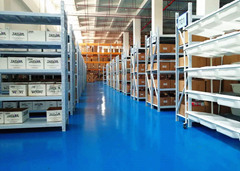
The men's shoe market is undergoing a structural change
The size of China's men's shoes market has exceeded 380 billion yuan in 2024, and is expected to reach about 520 billion yuan by 2030, with an average annual compound growth rate maintained in the range of 4.5% to 5.8%. But the growth in total volume masks a fact that deserves more attention: differentiation between categories is accelerating.
Offline channels for business formal leather shoes continue to be under pressure, and the revenue performance of traditional leather shoe brands is not ideal. At the same time, online sales of men's casual shoes exceeded 5 billion yuan in the first 10 months of 2025, and the Douyin channel soared from 23 million yuan at the beginning of the year to 689 million yuan in October. SHEIN will launch a focus on investment in men's footwear categories in 2026, with Dexun casual shoes, workwear Martin boots, Chelsea boots and loafers becoming key development directions.
The category landscape of men's shoe e-commerce is expanding from a single business formal wear to diverse scenarios such as casual shoes, canvas shoes, height-increasing shoes, work boots, rain boots, cloth shoes, etc. For merchants, the front-end product selection space has become larger, but the complexity of the back-end supply chain has also increased sharply.
The complexity of men's shoe warehousing is hidden in the span of categories
Putting business leather shoes, canvas shoes, work boots, rain boots, traditional cloth shoes, height-increasing shoes, men's sandals and various shoe accessories in the same warehouse and managing them is far more difficult than the simple enlargement of ordinary footwear warehousing.
Physical properties vary greatly between categories. The uppers of business formal leather shoes are mostly made of materials, which are sensitive to temperature and humidity. Improper storage can easily lead to mold and deformation. Shoe stretchers need to be filled to maintain the shape of the shoes. Work boots and Martin boots are heavy and have high shafts. Stacking them will cause the shafts to collapse and the uppers to be indented. They need to be stored in layers instead of stacked on shelves. Canvas shoes are afraid of moisture and pressure. The cloth surface of traditional cloth shoes easily absorbs odors. The sole structure of height-increasing shoes is special and cannot bear load. Men's sandals and slippers are light in size but have many SKU color combinations. Shoe accessories such as shoelaces, insoles, and shoe trees are small miscellaneous items that are easily missed or mismatched during picking.
The depth and width of SKUs grow simultaneously. A work boot may come in multiple colors such as brown, black, and sand. Each color has 6 to 8 sizes. Coupled with the distinction between wide last and standard last, there may be more than 20 SKUs for a single style. It is not uncommon for a medium-sized men's shoe brand to have thousands of SKUs on sale. Under the traditional manual management model, the efficiency of finding goods is low, serial codes are sent incorrectly, best-selling models are out of stock, and slow-selling items are backlogged at the same time, which severely drags down the inventory turnover rate.
Seasonal fluctuations are structural. Autumn and winter are the peak seasons for work boots, Martin boots, and suede leather shoes, while spring and summer are the home seasons for canvas shoes, men's sandals, and breathable casual shoes. Demand changes dramatically when the seasons change. If the warehousing plan is not flexible, it is almost inevitable that the warehouse will be empty in the off-season and out of stock in the peak season.
Returns: An easily overlooked expense item on the men's shoe e-commerce income statement
The return rate of men's shoe e-commerce is running at a high level. The return rate for formal leather shoes is generally between 18% and 22%, which is higher than the overall men’s clothing average of 12%. The return experience satisfaction for work shoes is only 57%, and the average return experience score for men's high-top shoes is only 3.61.
Reasons for returns are more diffuse than for regular footwear. Inaccurate sizes are a common problem, but different categories have different incentives for returns. Returns of formal leather shoes are mostly due to discomfort in the last shape and the leather is not as expected. Returns of work boots are concentrated on perceived weight deviation and discomfort in the shoe tube wrapping. Returns of canvas shoes are often related to the wear resistance of the soles and the texture of the fabric. Returned goods need to undergo category-specific quality inspections: leather shoes must be inspected for scratches on the uppers and leather creases, work boots must be inspected for sole wear and boot deformation, and canvas shoes must be checked for stains on the fabric and the integrity of the shoe box.
In the traditional return processing process, the average cycle from the consumer to the quality inspection, re-warehousing, and re-shelving may be as long as more than 7 days. For categories with a sales window, missing a week means that the residual value of the product drops significantly.
Refined warehousing: let different categories of men's shoes find their place
The difference between ordinary fulfillment warehouses and professional fulfillment warehouses for men's shoes does not lie in the size, but in the depth of understanding of category differences and the ability to implement them.
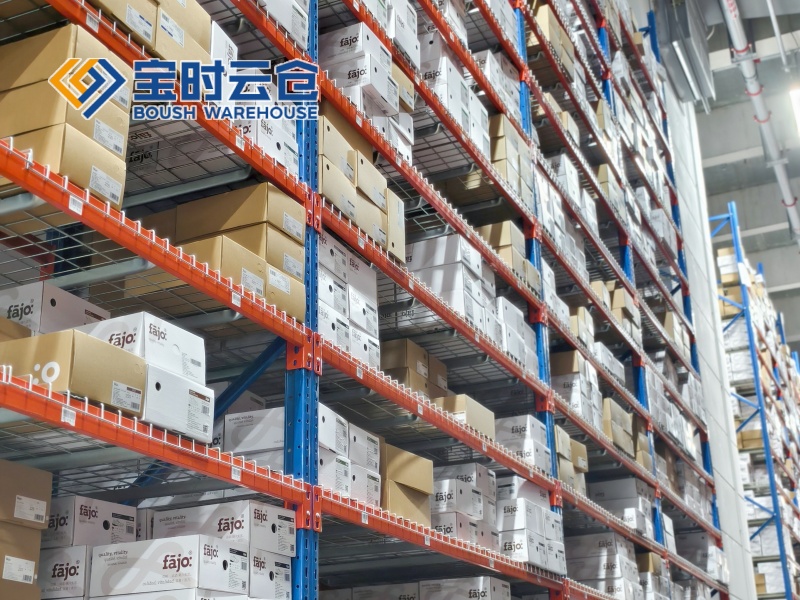
Baoshi Fulfillment's practice in this field provides a reference sample. This service provider, which has been deeply involved in the field of third-party warehousing and logistics for more than ten years, has deployed four major warehousing clusters in the Yangtze River Delta, with a total area of more than 100,000 square meters. In the shoe storage process, Baoshi Fulfillment adopts a partitioned and classified management model. It scientifically divides shoes according to size, color, style, season and material. It implements one-product-one management and assigns an identity to each shoe product. Staff can quickly locate goods through PDA equipment, reducing the time to find goods by more than 60% on average.
In response to the special needs of different men's shoe categories, Baoshi Fulfillment has made differentiated treatments. Business leather shoes are stored in a dedicated area, equipped with shoe stretchers to maintain the shape of the shoes and avoid accelerated aging of the leather due to fluctuations in temperature and humidity. Work boots and Martin boots are stored in layers on shelves instead of stacked. Each pair is stored independently to prevent the deformation of the boot shaft from the source. Canvas shoes and cloth shoes are arranged in dedicated storage areas that are dust-proof and moisture-proof. Set up independent partitions for small items such as shoe accessories, and cooperate with the light picking system to achieve fast and accurate picking, reducing the risk of missing items and mismatching. Baoshi Fulfillment also has a dedicated storage area for shoes and clothing, equipped with dust-proof, moisture-proof, and deformation-proof storage facilities.
The underlying logic of this system is to upgrade footwear products from goods to data nodes, and the circulation of each SKU has traces and numbers to follow. The SWMS smart warehousing management system independently developed by Baoshi Fulfillment connects the full link of inventory and order data, supports multi-platform data synchronization, and has an account-actual consistency rate of more than 99.9%, enabling goods to be put on shelves on the same day after arrival before 17:00.
Reverse logistics: the professional threshold for men's shoe return processing
Men's shoe return processing is a hard test question to test the professional capabilities of fulfillment warehouse service providers.
The returned business leather shoes need to be judged: Are there irreversible creases on the uppers? Does sole wear affect secondary sales? Is the shoe box complete? Returned work boots need to be inspected: Is the boot shaft deformed? Are the treads on the soles severely worn? Are shoelaces and accessories complete? These judgments require category knowledge and professional standards, and it is difficult to implement a universal return process.
Baoshi Fulfillment has established exclusive quality inspection standards for footwear in reverse logistics processing. Relying on years of standardized return processes, returns processing is broken down into warehouse scanning, express unpacking, quality inspection, information entry, goods sorting, warehousing and shelving, data return, etc. Each step has clear operating specifications and responsibilities. In terms of timeliness guarantee, registration of returned items will be completed within 3 hours after they arrive at the warehouse, and unpacking, quality inspection, cleaning and system entry will be completed within 24 hours. Except for major promotion activities, return orders placed before 17:00 can be completed on the same day. For returned goods with minor defects, simple repair services can be provided to quickly return the sellable goods to stock.
For the category of leather shoes, Baoshi Fulfillment has added shoe shape repair and leather surface cleaning links in the return process, so that the salable goods can quickly return to sales status. For the work boots category, focus on checking the support structure of the boot shaft and the wear degree of the soles to ensure that the quality of the products on the secondary shelves is trustworthy. This category-specific reverse logistics capability changes returns from passive aftermath to proactive management.
Omni-channel inventory collaboration: let each pair of shoes find the right order
The sales channels of men's shoe brands are rapidly diversifying. Tmall flagship store, Douyin live broadcast room, JD.com self-operated, offline stores, expert distribution, corporate group buying, and multiple channels operating in parallel have become the norm.
Problems ensued: the inventory data of the same SKU in different channels was fragmented, resulting in online out-of-stock and store backlog occurring at the same time. A work boots sell well in the northern market, but have been unsold in southern stores for several weeks. However, the distribution logic still follows the unified distribution method of the headquarters, and it is impossible to make differentiated adjustments according to the consumption characteristics of different regions.
The omni-channel inventory management system of Baoshi Fulfillment attempts to solve this problem. Its SWMS system connects the full link of inventory and order data, and channels such as online malls, store POSs, and distribution platforms share the same set of inventory data sources. Merchants can see the real-time inventory of all channels in one system and dynamically allocate goods according to the sales trends of each platform. For men's shoe brands that operate multiple channels at the same time, this means that they can more flexibly respond to demand fluctuations in different channels and avoid the situation of out of stock on one platform and backlog on that platform.
Choosing the right fulfillment warehouse partner is the starting point for the efficiency of the men's shoe e-commerce supply chain
When men's shoe brands choose fulfillment warehouse delivery service providers, they need to jump out of the inertial thinking of comparing price and area, and focus on matching capabilities in several dimensions.
Depth of category understanding. Does the service provider really understand the storage differences between business leather shoes and work boots? Do you know the maintenance points of canvas shoes and traditional cloth shoes? This determines the sophistication of warehouse management.
System docking capability. Can the WMS system be seamlessly connected with mainstream e-commerce platforms and ERP systems? Can inventory data be synchronized in real time across multiple channels? This is related to the smoothness of omni-channel operations.
Reverse logistics professionalism. Do the return quality inspection standards cover the exclusive requirements for different categories such as leather shoes, boots, canvas shoes, etc.? Is the secondary listing process efficient? This directly affects the efficiency of capital turnover.
Flexible performance capabilities. Can capacity be rapidly expanded during the peak season of autumn and winter boots? Can spring and summer casual shoes be flexibly retracted during the off-season? This determines whether the brand can grasp every sales window while controlling warehousing costs.
Baoshi Fulfillment's more than ten years of accumulated footwear warehousing experience, as well as its systematic capabilities in refined warehousing, omni-channel fulfillment, and reverse logistics processing, provide men's shoe merchants with a choice worthy of careful evaluation. When products of various categories such as business leather shoes, work boots, canvas shoes, height-increasing shoes, and men's sandals can all find suitable storage solutions and operating standards in the warehouse, the improvement of supply chain efficiency is no longer a slogan, but a quantifiable and perceptible operational improvement.
The competition among men's shoe e-commerce companies is extending from the competition for traffic to the back-end of the supply chain. Whoever can establish an efficiency advantage in warehousing and logistics will be able to hold on to their own profit margins in a market environment where gross profit margins are continuously squeezed.