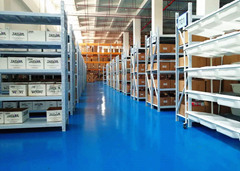
The outbreak of outdoor shoes and clothing has pushed warehousing and logistics into the spotlight
In the first half of 2026, China's adult outdoor sports shoes and apparel market will grow by more than 20% year-on-year, exceeding the overall growth rate of the apparel industry by nearly 18 percentage points. As of April 2025, the number of participants in outdoor sports in China has exceeded 400 million, and by the first half of 2026 it has climbed to nearly 500 million. According to data from the Dewu platform, sales of cross-country running shoes increased by 108% year-on-year, mountaineering shoes increased by 76% year-on-year, and fleece jackets increased by 62% year-on-year.
In addition to numbers, what is more worthy of attention is the structural changes in outdoor consumption. 61% of outdoor consumers make temporary purchases, and more than 60% choose to participate in outdoor activities during fragmented periods such as weekday evenings or weekends. This means that outdoor shoes and clothing are no longer the traditional "stock up in peak season and clear out in off season" rhythm, but are becoming a daily, high-frequency, multi-scenario consumption behavior.
For merchants, front-end demand is becoming more and more fragmented and diversified, and whether the back-end supply chain can keep up has become a key variable in determining profit margins. The warehousing and logistics of outdoor shoes and clothing is precisely the link in the entire supply chain that is more likely to be underestimated and more prone to problems.
Why is the warehousing of outdoor shoes and clothing more difficult than ordinary shoes and clothing?
Putting the categories of jackets, hiking shoes, ski suits, river-tracing shoes, fleece jackets, soft-shell jackets, functional underwear, military fan clothing, work shoes, and outdoor socks in the same warehouse and managing them is far more difficult than a simple amplification of ordinary clothing warehousing.
The complexity of SKU increases exponentially. The same type of jacket may have two size systems, European and American, and can be divided into men's and women's and unisex models. The color can be dark or bright, and the SKU complexity is significantly higher than that of ordinary clothing. Hiking shoes and cross-country running shoes have a wide range of sizes and obvious differences in last shapes; ski clothing involves different thicknesses and waterproof levels; functional underwear comes in different weights and materials. For a medium-sized outdoor brand, the number of SKUs easily exceeds thousands, and the sales rhythm and life cycle of each SKU are different.
The span of categories is extremely large, and storage requirements vary greatly. From small items such as mini carabiners and quick-drying socks, to regular categories such as outdoor shoes and clothing, backpacks, and sleeping bags, to large special-shaped items such as tents, snowboards, canopy poles, etc., there is a mix of light and heavy goods with widely varying specifications. Jackets are afraid of pressure and moisture, ski jackets need to be stored in a dry and ventilated environment, river shoes and beach shoes tend to have sand residue and need to be cleaned specially, fleece jackets are prone to pilling, and functional underwear has higher requirements for hygiene standards. It is difficult for conventional storage shelves and standardized operating procedures to adapt to these completely different category attributes at the same time.
Seasonal fluctuations are a sword hanging over our heads. Autumn and winter are the peak seasons for jackets, ski suits, and down jackets, while spring and summer are the main seasons for river-tracing shoes, quick-drying suits, sun protection suits, and beach shoes. Demand changes dramatically when the seasons change. If the warehousing plan is not flexible, resources will be idle in the off-season and out of stock in the peak season. What’s even more troublesome is that the replenishment cycle of outdoor brands is usually longer than that of fast fashion. Once the inventory is judged incorrectly, it will either be out of stock for a long time and miss the sales window, or the stock will be backlogged for the entire season and occupy funds.
Returns processing is a real profit hazard. The return rate of jackets on the Douyin platform has been hovering at 27% or higher for a long time. After accounting for the investment costs, the net profit margin of some merchants has been compressed to an extremely thin space. The reasons for returns of outdoor shoes and clothing are more complicated than ordinary shoes and clothing: size discrepancy is just one of them, and the expected functional gap (waterproof performance, thermal insulation effect, and breathability are not as good as expected), incorrect scene adaptation (bought for the wrong purpose), and missing accessories (missing carabiners and storage bags) are all reasons for high-frequency returns. Returned goods need to undergo professional quality inspection to determine whether the waterproof coating is damaged, the soles are worn, and whether the fabric is stained. These judgments directly affect whether the goods can be resold.

From "saveable" to "managed well": Category adaptation logic of professional fulfillment warehouses
The difference between ordinary fulfillment warehouses and outdoor shoes and clothing professional fulfillment warehouses does not lie in the size of the warehouse area, but in the depth of understanding of the category characteristics.
Baoshi Fulfillment's approach in this field provides a reference. This service provider, which has been deeply involved in the field of third-party warehousing and logistics for more than ten years, has deployed four major warehousing clusters in the Yangtze River Delta, with a total area of more than 100,000 square meters, including a robot smart warehouse cluster with an investment of tens of millions of yuan. But what really deserves attention is not its scale, but its refined management of outdoor shoes and clothing categories.
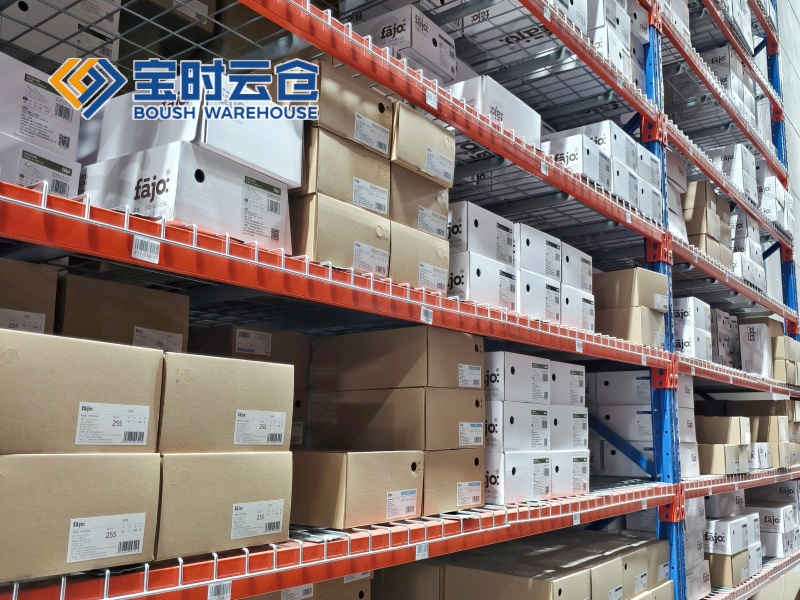
In the storage process, Baoshi Fulfillment has made differentiated partitions according to the characteristics of outdoor shoes and clothing. Functional outerwear such as jackets and soft-shell jackets are stored in dedicated areas to avoid accelerated aging of the waterproof coating due to temperature and humidity fluctuations; hiking shoes and mountaineering shoes are stored in anti-pressure storage spaces and independent compartments, and are bound in pairs to reduce mismatches; fleece jackets and functional underwear are arranged in dedicated storage spaces that are dust-proof and moisture-proof; ski clothing is equipped with independent partitions and ventilation storage conditions due to its large size and high requirements for a dry environment. This "one category, one policy" storage logic is essentially using warehousing management to extend the salable life cycle of goods.
In the sorting process, the risk of mis-delivery caused by the high appearance similarity of outdoor shoes and clothing cannot be ignored. A hiking shoe may come in five or six colors, and the same color may come in multiple sizes. If manual sorting is not careful, the codes will be mixed up. Baoshi Fulfillment uses PDA scanning operations and intelligent sorting systems to control the delivery error rate to less than one ten thousandth, and cooperates with the light picking system to achieve fast and accurate picking of small items.
Flexible contract fulfillment: making peak orders no longer a disaster
Seasonal fluctuations in outdoor footwear and clothing are structural and cannot be completely smoothed out through operational means. The key to the problem is whether the warehousing solution can control costs during the off-season and rapidly expand capacity during the peak season.
The dilemma of traditional self-built warehouses lies in the "dilemma": the vacancy rate of warehouses in the off-season is as high as more than 50%, and rent and labor costs are incurred as usual; orders increase sharply in peak seasons, and temporary recruitment and temporary rental of warehouses are not only costly, but also difficult to guarantee the quality of management. Some outdoor sports companies reported that the peak inventory peak in the peak season can be more than twice that in the off-season. Resource waste and fulfillment bottlenecks coexist under the traditional warehousing model.
The core value of the fulfillment warehouse delivery model is to convert fixed costs into variable costs. The flexible fulfillment system of Baoshi Fulfillment supports the adjustment of storage area and operating manpower on demand. It can be rapidly expanded during major promotions, and the peak daily processing capacity can be expanded to 300,000 orders. In the scenario of managing massive SKUs and daily average orders, its robot smart warehouse can improve personnel efficiency several times compared with the traditional model, and can flexibly cope with business peak periods such as major sales.
This elasticity is of particular significance to outdoor footwear and clothing merchants. Skiwear brands focus on warehousing before winter and can reduce the storage area in spring; merchants of river shoes and beach shoes can flexibly expand before the summer peak season and quickly shrink after autumn. Warehousing costs fluctuate with the sales rhythm, rather than being wasted in the off-season.
Omni-channel inventory collaboration: Let every pair of hiking shoes find the right order
The sales channels of outdoor brands are rapidly diversifying. Online e-commerce platforms, live streaming, offline outdoor stores, dealer distribution, event cooperation, corporate team building customization, and multiple channels operating in parallel have become the norm.
Problems ensued: the inventory data of the same SKU in different channels was fragmented, resulting in online out-of-stock and store backlog occurring at the same time. A certain type of hiking shoes is selling well in stores in the north, but no one is buying it in stores in the south for weeks. However, the distribution logic still follows the "unified distribution by headquarters" method, and it is impossible to make differentiated adjustments according to the consumption characteristics of different regions.
The omni-channel inventory management system of Baoshi Fulfillment attempts to solve this problem. Its self-developed SWMS smart warehouse management system connects the full link of inventory and order data, supports multi-platform data synchronization, and allows online malls, store POS, distribution platforms and other channels to share the same set of inventory data sources. Merchants can see the real-time inventory of all channels in one system and dynamically allocate goods according to the sales trends of each platform.
For outdoor brands that operate Tmall, Douyin, JD.com, Xiaohongshu and offline stores at the same time, this means that they can more flexibly respond to demand fluctuations in different channels and avoid the embarrassing situation of "this platform is out of stock and that platform is backlogged".
Reverse Logistics: The Professional Threshold for Return Processing of Outdoor Shoes and Clothing
The return processing of outdoor shoes and clothing is a hard test question to test the professional ability of fulfillment warehouse service providers.
The returned jacket needs to be judged: Is there any irreversible damage to the waterproof coating? Are the zippers and Velcro in good condition? Are there any obvious signs of wear on the lining? Returned hiking shoes need to be inspected: Will the degree of wear on the soles affect secondary sales? Are the insoles and shoelaces complete? Is the shoe box complete? Returned ski clothing needs to be checked: Are there scratches or snags on the fabric? Has the filling shifted?
These judgments require category knowledge and professional standards, and it is difficult to implement the general return process of ordinary fulfillment warehouses.
Baoshi Fulfillment has established category-specific quality inspection standards for reverse logistics processing. Return processing can complete registration within 3 hours, and complete unpacking, quality inspection and system entry within 24 hours. For categories such as jackets and fleece that are prone to wrinkles due to folding, we provide professional repair and ironing services to quickly restore salable items to sales status. For categories such as ski wear that require a high dry environment, exclusive ventilated storage is arranged after returns are put into storage to avoid fabric performance degradation caused by humid environments.
The value of this reverse logistics system is that it changes returns from passive aftermath to active management. The high return rate of outdoor shoes and clothing is a category characteristic and is difficult to fundamentally eliminate. However, the speed and quality of return processing directly determines the residual value of returned goods and the efficiency of fund recovery.
Choosing the right fulfillment warehouse partner is the starting point for the efficiency of the outdoor footwear and clothing supply chain
When outdoor shoe and clothing brands choose fulfillment warehouse dropshipping service providers, they need to break away from the inertial thinking of "comparing price and comparing area" and focus on matching capabilities in several dimensions.
Depth of category understanding. Does the service provider really understand the storage differences between jackets and river shoes? Do you know the maintenance points of ski clothing and soft shell clothing? This determines the sophistication of warehouse management.
System docking capability. Can the WMS system be seamlessly connected with mainstream e-commerce platforms and ERP systems? Can inventory data be synchronized in real time across multiple channels? This is related to the smoothness of omni-channel operations.
Reverse logistics professionalism. Are the return quality inspection standards clear? Is the secondary listing process efficient? This directly affects the efficiency of capital turnover.
Flexible performance capabilities. Is it easy to expand capacity during peak season? Can the peak sales volume be stably sustained? This determines whether the brand can grasp every sales window.
Baoshi Fulfillment's more than ten years of accumulated shoe and apparel warehousing experience, as well as its systematic capabilities in omni-channel fulfillment, flexible expansion, and reverse logistics processing, provide outdoor shoe and apparel merchants with a choice worthy of careful evaluation. When various categories of products such as jackets, hiking boots, ski suits, and river-tracing shoes can find suitable storage solutions and operating standards in the warehouse, the improvement of supply chain efficiency is no longer an empty talk, but a quantifiable and perceptible operational improvement.
Competition in outdoor shoes and clothing is extending from product design and traffic operations to the back-end of the supply chain. Whoever can establish an efficiency advantage in warehousing and logistics will be able to hold on to their own profit margins in a market environment where gross profit margins are continuously squeezed.