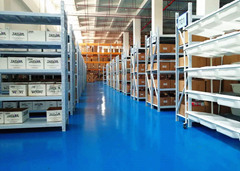
How many invisible costs are hidden in the supply chain of a pair of shoes?
In 2025, the size of China's e-commerce shoe industry will reach 271.816 billion yuan, and the global market will be close to 955.4 billion yuan. It is expected to exceed 1.5 trillion by 2032. Behind the numbers is the reality that countless shoe merchants are struggling repeatedly between warehousing, shipping, and returns.
Footwear e-commerce is far from as simple as taking photos of shoes and putting them on shelves. High SKU density, complex size and color combinations, peak sales surge orders of 8 to 12 times, and the average return rate has remained at 20% to 30% or even higher for a long time. These factors add up and make warehousing and logistics an easier step for footwear merchants. A report shows that 56% of brands in the clothing and footwear industry have a return rate of 30% or above, and the volume of e-commerce returns is three times that of physical retail.
Where is the problem? The traditional warehousing model treats shoes as standard products and lacks refined management based on category characteristics. No matter how good the front-end sales are, once the back-end performance fails, the profits will be eaten up bit by bit.
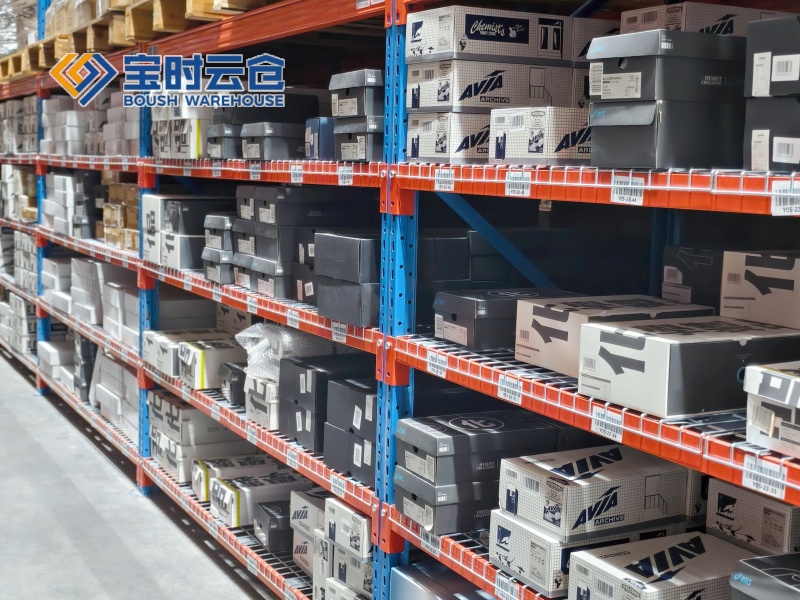
Why is footwear warehousing more difficult than clothing?
Footwear products have several natural characteristics, which determine that its warehousing and logistics are more difficult than most categories.
, the complexity of SKU increases exponentially. A pair of sports shoes usually has multiple colors and sizes of the same style. Coupled with different last types and different batches, the number of SKUs can easily exceed thousands. Under the traditional manual management model, miscoding, wrong shipments, and inefficiency in finding goods are almost the norm. Best-selling models are out of stock and slow-selling items are backlogged at the same time, which severely drags down the inventory turnover rate.
Second, shoe shape protection requirements are special. The heels of high-heeled shoes, the cushioning structure of sports shoes, the moisture-proof requirements of uppers, and the anti-aging treatment of EVA midsoles are all problems that ordinary shelves cannot solve. If you are not careful during storage and transportation, the shape of the shoe will be deformed and the material will be damaged, which will directly lead to the devaluation of the product.
Third, returns processing is a real profit black hole. The return rate of footwear e-commerce has been at a high level among all major categories for a long time. Taking Douyin women's shoes as an example, the return rate generally starts from 45%, and some popular models even reach 70%. The traditional return processing process is cumbersome, from the time the consumer sends it back to quality inspection, restocking, and re-shelving. The average cycle is more than 7 days. The product misses the golden sales window and can only be cleared at a reduced price.
Fourth, the peak sales test is the elastic limit of the warehousing system. The order volume increased sharply during 618 and Double 11. If the warehousing service provider does not have the flexibility to expand capacity, warehouse liquidation and delayed shipments are almost inevitable.
Refined warehousing: let each pair of shoes have its own place
In view of the particularity of footwear products, professional fulfillment warehouses need to jump out of the general warehousing idea and establish a category-specific operation system. Baoshi Fulfillment’s approach in this field deserves attention.
Baoshi Fulfillment has been deeply involved in the field of smart warehousing for more than ten years. It has a standardized warehousing cluster of 100,000 square meters and a professional operation team of about 300 people. It has been rated as a high-tech enterprise and a Shanghai specialized and new enterprise. In terms of footwear warehousing management, Baoshi Fulfillment adopts a partition classification model, scientifically partitioning according to size, color, style, season, and material, and implements one-product-one management. Each product has an identity mark, and staff can quickly locate it through PDA equipment, reducing the time to find goods by more than 60% on average.
In view of the problems that shoes are susceptible to moisture and mildew, and EVA midsoles are prone to aging, Baoshi Fulfillment is equipped with a constant temperature and humidity storage environment to reduce the loss of goods from the source of storage. At the inventory management level, its self-developed SWMS smart warehousing management system connects the full link of inventory and order data, supports multi-platform data synchronization, and has an account-actual consistency rate of over 99.9%, enabling goods to be put on the shelves on the same day when goods arrive before 17:00.
The underlying logic of this system is to upgrade footwear products from "goods" to "data nodes", and the circulation of each SKU has traces and numbers to follow.
Intelligent sorting and distribution: where is the confidence not to burst the stock during the big promotion?
Order fragmentation is another significant feature of footwear e-commerce. Consumers often only buy one or two pairs at a time, but the total order volume is large and timeliness requirements are high, which requires efficient and accurate processing capabilities in the warehousing and sorting process.
Baoshi Fulfillment has invested in AGV unmanned handling equipment and an intelligent sorting system in the sorting process. The system automatically plans shorter picking paths and greatly reduces manual errors. In terms of delivery timeliness, orders pushed before 17:00 can be sent out on the same day, and the delivery error rate is controlled within one ten thousandth. This level means that merchants do not need to hire additional temporary workers or temporarily rent warehouses during the major promotion period, and the flexible production capacity of the warehousing service provider itself can handle the peak pressure.
In addition, Baoshi Fulfillment's warehousing and distribution services cover all scenarios such as B2C, B2B, offline store replenishment, and expert distribution, and can be adapted to mainstream channels such as Tmall, JD.com, Douyin, Xiaohongshu, and Dewu, realizing omni-channel inventory sharing and unified management. For footwear merchants operating multiple platforms at the same time, this omni-channel ability to deliver goods in one inventory directly solves the stubborn problems of inventory fragmentation, oversoldness, and overstocking among channels.
Reverse logistics: from cost center to value node
If forward performance tests the basic skills of warehousing service providers, then reverse logistics is the link that really widens the gap.
The complexity of returning shoes is that the returned goods need to undergo strict quality inspection to determine whether they will affect secondary sales. Wear on the soles, creases on the uppers, integrity of the shoe box, and whether accessories are complete, all require professional judgment. Under the traditional model, this process takes several days, and a large number of sellable products miss the best sales period while waiting.
Baoshi Fulfillment has established a standardized operating process for reverse logistics processing, coupled with the fifth-generation return processing system, and introduced digital employees to realize the automated processing of standardized return orders. After the returned goods arrive at the warehouse, they go through quality inspection, cleaning, repackaging and other processes, and the sellable goods are quickly returned to the inventory to reduce inventory losses. The core value of this model is to transform returns from passive response to active management, and transform reverse logistics from a cost center into an improvement point in operational efficiency.
Choosing a fulfillment warehouse is not just choosing a warehouse, but also choosing a supply chain partner.
When footwear merchants choose fulfillment warehouse service providers, it is easy to fall into a misunderstanding: only comparing prices, not looking at ability matching. In fact, the warehousing and logistics needs of the footwear category are unique, and several dimensions need to be focused on when selecting.
Whether the warehousing environment is suitable for the characteristics of footwear. Are there constant temperature and humidity conditions? Is there a storage solution for shoe type protection? These seemingly detailed issues are directly related to the loss rate of goods.
Whether the system capabilities support omni-channel operations. Can the WMS system be seamlessly connected with mainstream e-commerce platforms? Does it support real-time inventory synchronization and unified management of multi-channel orders? This determines whether the merchant can achieve one-plate operation.
Whether the reverse logistics capability is mature. Return processing timeliness, quality inspection standards, and secondary listing processes are all indicators that directly affect capital turnover efficiency. It is recommended to clarify the specific time commitment and operating specifications for return processing before cooperation.
Whether the flexible production capacity is sufficient. Can the capacity be expanded quickly during the big promotion period? Do you have a systematic plan to deal with order surges? This is related to whether merchants can seize sales opportunities during major promotions.
Supply chain efficiency is the next competition for footwear e-commerce
The competition among footwear e-commerce companies is shifting from traffic competition to supply chain efficiency competition. Front-end customer acquisition costs continue to rise, and back-end fulfillment capabilities have become a key variable in determining profit margins. By leaving warehousing, sorting, distribution, and returns to professional fulfillment warehouse service providers, merchants can focus their limited energy and resources on product selection, content marketing, and user operations.
Baoshi Fulfillment's deep cultivation in the vertical field of footwear provides a reference sample: replacing manual experience with digital systems, replacing extensive management with refined operations, and replacing link fragmentation with full-link collaboration. For footwear merchants who are looking for warehousing and logistics upgrade solutions, choosing a fulfillment warehouse partner that truly understands the characteristics of the footwear category may bring more certain returns than investing an additional advertising budget.