There is a common cognitive bias in the e-commerce industry: fulfillment warehouse is an exclusive tool for big sellers. The minimum order threshold, which can easily reach hundreds or even thousands of orders per day, discourages small businesses. But this judgment is being revised by reality. More and more start-up brands, live broadcast experts, and designer studios are in urgent need of professional warehouse and distribution support at the stage of averaging dozens of orders per day - not because their order volume suddenly increases, but because they realize that freeing their energy from packaging and posting orders is more valuable than the short-term gains of taking a few more orders. The flexible cooperation model represented by Baoshi Fulfillment is responding to this long-neglected demand.
The neglected plight of small businesses
The average daily order is thirty, I rent a private house, spend two or three hours a day packaging and shipping, and it seems to work. But the real scenario is far more complicated than imagined. Operations, customer service, picture taking, and editing already take up most of the time, and packaging and order placement still have to be squeezed in. Occasionally, a live broadcast will produce a small hit, and orders will double, which is too busy for one person. Off-season orders have fallen, but warehouse rent and labor costs have remained unchanged. [
The deeper contradiction lies in the instability of service quality. Customers will not lower their standards just because you are a small seller. You will still give negative reviews if the delivery is slow or if the packaging is damaged. For designer brands, the unit price per customer can easily reach hundreds or even thousands of yuan, the goods are expensive, and the requirements for warehousing environment are even higher than those for fast-moving consumer goods. The return rate of the clothing category is generally over 50%. The returned clothes need to be unpacked, inspected, sorted, and re-shelved. This process takes at least three to five days, and the time for designing new products is completely occupied.
These problems are not a matter of unit size, but a matter of cost structure and service capabilities.
Zero threshold is not a slogan, it is a set of cost logic
The core of Baoshi Fulfillment's flexible cooperation model open to small and medium-sized businesses is to convert fixed costs into variable costs. The storage area is billed based on actual use, and service fees are settled based on actual order volume. Merchants do not need to bear rigid expenses such as fixed warehouse rent, equipment investment, and full-time personnel. Spend less in the off-season, and expand flexibly in the peak season, so you don’t have to pay for idle storage.
From the perspective of the charging structure, the warehousing fee ranges from 0.5 to 3 yuan per square meter per day, the operating fee ranges from 0.5 to 4 yuan per order, and the delivery fee floats between 1.5 and 5 yuan per order according to the express delivery selection and delivery distance. The comprehensive cost per order is approximately 2.5 to 6 yuan. A detailed quotation form will be issued before cooperation. Storage fees, operating fees, and express delivery fees will be listed separately. Value-added services will be listed separately. The system will generate fee details on a daily basis.
Small size does not mean low configuration
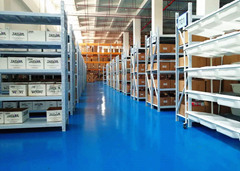
Flexible cooperation does not mean service shrinkage. Baoshi Fulfillment has deployed four directly operated warehouses in Songjiang, Shanghai, with a total storage area exceeding 100,000 square meters. All warehouses are Category C and II fire-fighting configurations, equipped with full-coverage fire sprinkler systems, epoxy floors and all-weather intelligent monitoring. For merchants with an average of dozens of orders per day, their goods enjoy the same warehousing environment and security standards as those of leading brands.
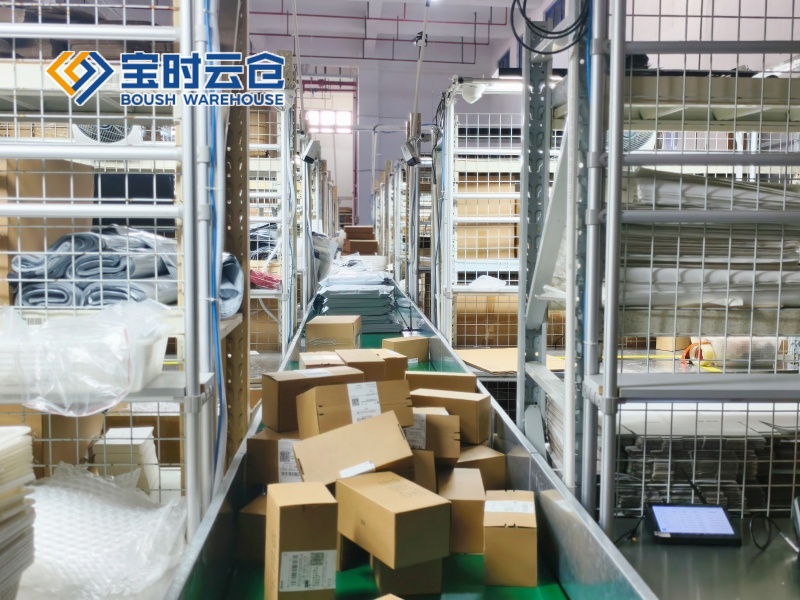
At the system level, Baoshi Fulfillment has independently developed the SWMS smart warehousing management system, WCS smart scheduling system and OMS order management system. Orders are automatically accessed from each platform, inventory data is synchronized in real time, and the picking accuracy is stable at 99.99%. Merchants can log in to the system to view inventory occupancy and expense details in real time, without manual accounting or worrying about overselling.
In terms of delivery timeliness, orders pushed before 17:00 are sent out on the same day, and the average daily shipment volume stably carries 50,000 orders, and the peak value can be expanded to 300,000 orders. There is a dedicated center for returns processing. Registration of goods is completed within three hours after arrival, and unpacking, quality inspection and system entry are completed within 24 hours. These capabilities are also open to merchants with an average of dozens of orders per day.
For the clothing category, Baoshi Fulfillment provides value-added services such as hanging clothes storage, ironing repair, and tag replacement; the beauty and food categories are equipped with constant temperature and humidity storage areas and expiration date management; the jewelry category has full-process monitoring traceability and anti-oxidation storage solutions. Small-scale merchants can choose corresponding services based on category needs and pay as needed, without having to pay for functions they don’t use.
What stage is suitable for accessing the fulfillment warehouse?
Whether a small business needs a fulfillment warehouse depends on three judgment dimensions. The first is energy allocation. If you spend more than two hours a day on packaging and shipping, and this time could have been invested in product selection, operations or content creation, the value of the fulfillment warehouse has already emerged. The second is the cost structure. If the price of bulk express delivery is too high, the proportion of logistics costs will significantly squeeze profit margins. The express discounts brought by the scale effect of fulfillment warehouses can directly improve profitability. The third is growth expectations. If the business is in a rising period and the order volume fluctuates greatly, the fixed cost of self-built warehousing will become a burden, and the flexible cooperation model can allow costs to fluctuate with orders.
The positioning of Baoshi Fulfillment is not to replace the core capabilities of merchants, but to undertake those back-end links that distract energy, reduce efficiency, and affect service quality. After merchants who average dozens of orders per day move in, they are essentially using a controllable monthly expenditure in exchange for a warehousing and distribution system that originally required millions of investments.
For small-scale merchants who are evaluating fulfillment warehouse cooperation, it is recommended to clarify their own order fluctuation patterns, SKU characteristics and product condition requirements during the negotiation stage, in order to obtain accurate quotation plans and service configurations. The value of a small volume does not lie in the single volume itself, but in that it represents a growing business and deserves a set of warehousing and distribution infrastructure that can grow with it. [